
Included vs Optional vs Operator-Dependent
Three categories cover everything you will see offered ashore. Knowing which is which prevents the most common pre-trip confusion: discovering after booking that a famous stop was never part of your fare.
- Included: listed on your dated itinerary as part of the fare; typically at least one or two major stops, but exactly which ones depends on the ship and sailing
- Optional: sold onboard or in port for an extra price, subject to its own terms; booking early matters because popular items can fill
- Operator-dependent: possible in principle but contingent on water levels, weather, dam operations or port congestion; these can change or cancel day to day
Walking Levels, Steps and Small-Boat Transfers
A surprising number of Yangtze stops involve stairs. Summit platforms, old paths along gorge walls and small-boat jetties all add climbing and uneven footing that photos do not convey. Several excursions also include a small-boat transfer, a separate vessel for tributaries or scenic bays, which adds boarding time and handling.
Before committing to any ashore item, ask three questions: how many steps are involved, is there an alternative viewing point with less walking, and does the route include a boat transfer? Crews and port staff can usually answer on the spot. If mobility is limited, included stops and deck-based gorge viewing cover most of the highlights without the climb.
The Signature Stops, One by One
These are the places that appear across Yangtze itineraries, where your ship's dated itinerary includes them. Status (included, optional or operator-dependent), walking level and stage details for each are listed in the excursion map at /routes#excursions; here is what each one actually involves.
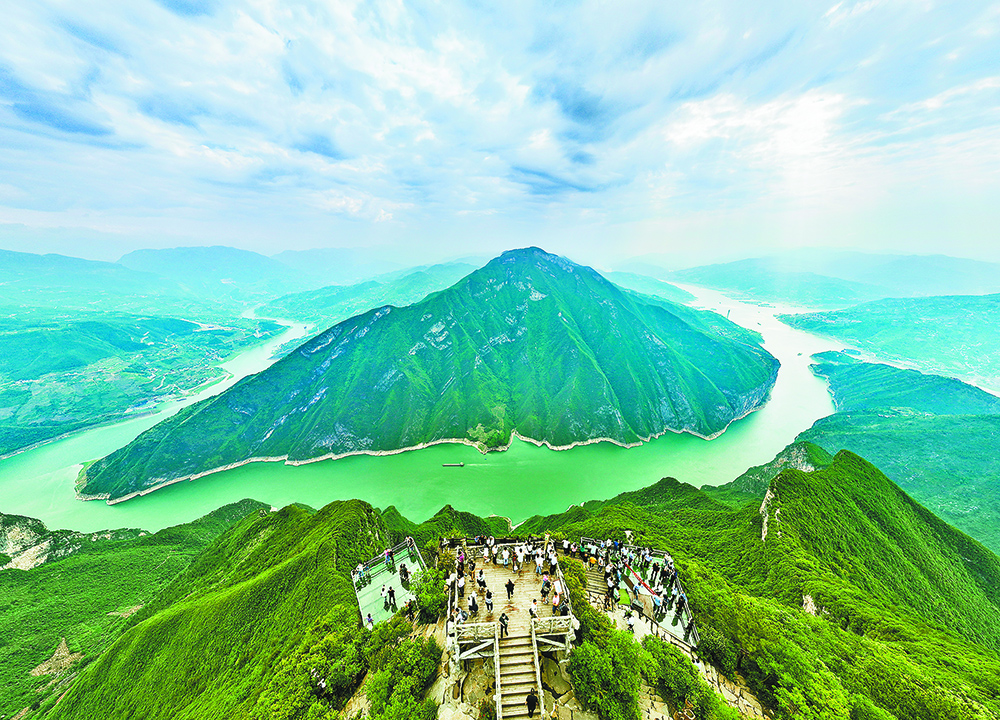
- Three Gorges Summit: a summit viewing platform above the reservoir with a long staircase to climb; the effort is real, and the panorama is why people do it
- Qutang Gorge (Kuimen): the shortest and narrowest of the three gorges; often experienced from deck during the announced passage, sometimes with a brief ashore stop at its mouth
- Wu Gorge: the longest and most scenic stretch; some sailings add small-boat trips into side bays (such as Shennü Bay), which vary by ship, season and water level
- Xiling Gorge: rugged and historically the hardest stretch for navigation; much of its old course now lies under reservoir water, so what you see depends on where your sailing passes
- Three Gorges Dam: the visit area (visitor centre or observation decks) varies by ship and date, and access is subject to operating conditions
- Ship Lift: the world's largest ship lift, part of the dam complex; whether you can view it up close or board related facilities depends on the sailing and current operations
- Fengdu Ghost City: a cultural site built around Chinese legend and folklore, usually reached as an optional add-on with its own transport and entry terms
- White Emperor City: the literary landmark at the mouth of Qutang Gorge; a short visit with deep historical associations, included on some sailings and optional on others
- Small-boat scenery: tributary boat trips (such as the Lesser Three Gorges), where present in your itinerary's data, offer a different scale of gorge viewing; check transfer times and walking at both ends
Why the Dated Itinerary Controls
Reservoir water levels shift through the year, dam operations follow their own schedule, and port congestion builds around holidays. Any of these can move a stop's timing, swap an included excursion for an alternative, or cancel one entirely, usually with short notice.
That is why the dated itinerary (your exact sailing) is the only authority on what is included, and why this guide describes places rather than promising stops. If something changes, the ship announces it; alternatives or refunds follow the operator's terms, which are worth reading before you sail.
Planning Tips for Ashore Time
A few habits make ashore time smoother, whatever your sailing includes.
- Sign up for popular optional excursions at the stated deadline; early, not when we get there
- Carry your passport for every ashore visit, plus small bills; card acceptance varies in port areas
- Pack a waterproof phone case or dry bag if any small-boat transfer is on your sailing
- Sun and rain protection matter more than fashion: gorge shade and open water alternate quickly
- Confirm the return-to-ship time for each excursion and build in a buffer; the ship does not wait for latecomers indefinitely
- Ask about step counts and alternative routes before paying for any climb-heavy stop
What each named stop actually means
Fengdu Ghost City
- Status
- Common classic-route stop
- Walking
- Moderate–high
Fengdu's Mingshan scenic area is built around more than two millennia of Chinese afterlife folklore, with Naihe Bridge, Ghost Gate and Tianzi Hall among its best-known landmarks.
Fengdu County Government ↗Xiao Guanshan Ancient Residences
- Status
- Selected itineraries
- Walking
- Low–moderate
Xiao Guanshan preserves relocated historic residences from the Three Gorges reservoir area and offers a quieter architectural counterpoint to Ghost City.
Fengdu County Government ↗Fengyan Sanguo
- Status
- Usually optional
- Walking
- Low
A large outdoor Three Kingdoms production using landscape-scale sets, lighting, water effects and live performance.
Trip.com · Fengyan Sanguo ↗Shibaozhai
- Status
- Operator-dependent
- Walking
- Moderate
Shibaozhai is a historic riverside complex built around a striking multi-storey timber tower.
Trip.com · Shibaozhai ↗Xituo Old Town
- Status
- Alternative shore stop
- Walking
- Moderate–high
Xituo is a historic Yangtze trading town known for Yunti, or “Cloud Ladder”, Street rising steeply from the river.
Trip.com · Xituo Old Town ↗White Emperor City
- Status
- Often optional downstream
- Walking
- Moderate–high
White Emperor City sits at the western entrance to Qutang Gorge, where Three Kingdoms history, poetry and the famous Kuimen view meet.
Trip.com · White Emperor City ↗Qutang Gorge / Kuimen
- Status
- Sail-through highlight
- Walking
- None
Qutang is the shortest and most dramatic of the Three Gorges, entered through the iconic Kuimen gateway just east of White Emperor City.
UNESCO · Three Gorges Scenic Area ↗Three Gorges Summit
- Status
- Alternative / optional
- Walking
- Variable
Three Gorges Summit rises above Kuimen and Qutang Gorge, trading close-up history for a high-angle panorama over the river corridor.
Trip.com · Peak of Three Gorges ↗Lesser Three Gorges
- Status
- Operator-dependent alternative
- Walking
- Low
The Lesser Three Gorges extend along the Daning River through Longmen, Bawu and Dicui gorges.
Trip.com · Lesser Three Gorges ↗Wu Gorge
- Status
- Sail-through highlight
- Walking
- None
Wu Gorge is the long, misty middle gorge of the Three Gorges, famous for steep peaks and the Goddess Peak landscape.
UNESCO · Three Gorges Scenic Area ↗Goddess Stream
- Status
- Common on selected routes
- Walking
- Low
Goddess Stream is a narrow tributary where cruise guests transfer to a smaller sightseeing boat for a closer canyon experience.
Century Cruises · classic route ↗Three Gorges Dam
- Status
- Common classic-route stop
- Walking
- Low–moderate
The land-based dam visit focuses on viewpoints and interpretation of the enormous hydroelectric and navigation complex.
USGS · Three Gorges Dam ↗Three Gorges Ship Lift
- Status
- Usually optional
- Walking
- Low
The ship lift carries a vessel in a water-filled chamber past the dam, creating a very different experience from the adjacent locks.
Century Cruises · classic route ↗Xiling Gorge
- Status
- Eastern gorge section
- Walking
- None
Xiling is the eastern and longest of the Three Gorges, continuing from the dam area toward Yichang.
UNESCO · Three Gorges Scenic Area ↗